Running is the best way to improve your body’s health and maintain the necessary tone. While running, dozens of different muscles come into play, which provides a good load on the cardiovascular, respiratory and other human systems. However, running can be different – recreational, sprinting and even marathon, in which the athlete covers tens of kilometers without a break! In any case, the overall success of training will depend on thecorrectly chosen running technique. For example, the movement technique when running short or long distances differs significantly.Moreover, if the athlete does not adhere to the correct technique, then training will be accompanied by constant pain (and sometimes injuries!). Today we will talk about how to choose the right running style, and also point out common mistakes when practicing athletics.
Health running (jogging)
0.5 – 3 km
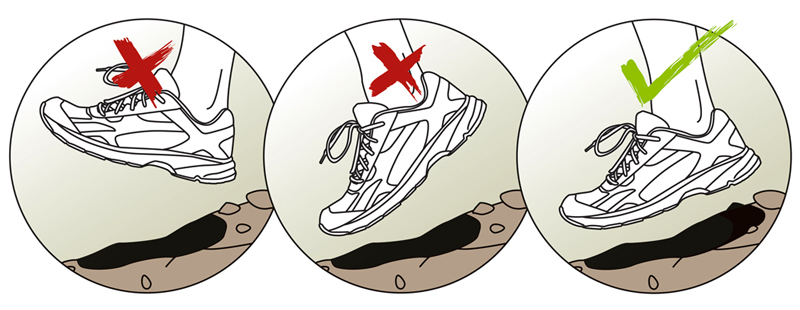
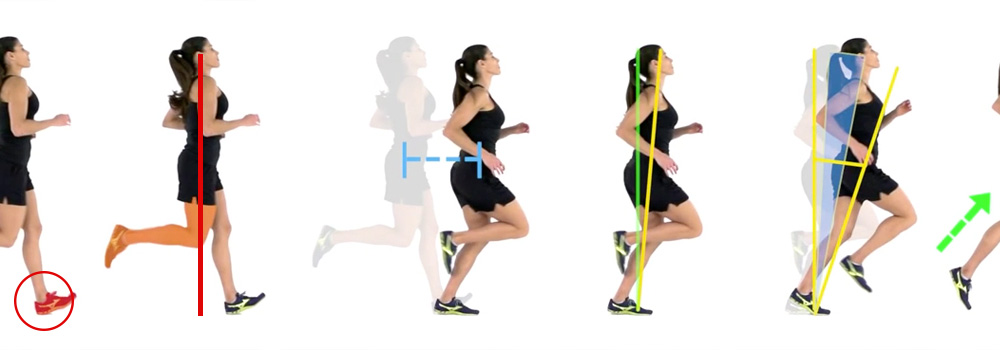
The main goal of regular jogging is general health and strengthening of the body. Anyone can start running: just a pair of comfortable sneakers (selection of shoes should be given due attention attention) and simple sportswear. Jogging technique is very simple. When landing, your foot should be placed on your full foot. You don’t need to take too wide steps, but you shouldn’t mince either: you need to push off from the surface with 25–30% of your maximum force. Imagine that you have a very long distance ahead of you – is it worth spending serious effort on completing the initial segment?This is how you should run. Hand work when jogging is no less important. Straighten your shoulders as much as possible without spreading your elbows to your sides. Let your arms move very close to your body, while your hands should move along a vertical plane (up and down).
In this case, you need to run at the most even and calm pace, which does not cause rapid heartbeat (“jumps” in pulse). You should not lift your legs high off the ground (for example, as 100-200 meter sprinters do). Thanks to this, your training will be as effective as possible.
Short distance running (sprinting)
30, 50, 100, 200 m
Experienced athletes overcome such distances in just a few tens of seconds. This means that starting speed and breathing are key: endurance, on the contrary, is actually not important. You need to run 30, 50, 100 or 200 meters with very wide steps, pushing off strongly from the surface. At the same time, your head should be kept as straight as possible, and your shoulders should be fully straightened.Don’t slouch: the risk of injury when positioning your body this way is very high. Of course, you need to run sprint distances as quickly as possible – but you should also remember the high likelihood of injury! That is why (and also to increase running speed) you need to land almost on one toe, without placing your foot on your full foot. The work of the hands is similar to simple running, however, the movements of the hands (they need to be collected, but not clenched into fists) occur with a much greater amplitude.
Medium, long distance and marathon running
2.5, 5, 10 km and more
The main task of a marathon runner is to use his own strength as rationally as possible throughout the entire distance. When running long distances, you need to keep your head straight. You shouldn’t throw it back or, conversely, slouch: your neck muscles will become stiff in literally 15–20 minutes, and further walking the distance will turn into a complete pain! The technique of leg movement differs significantly from the technique of running at other distances.When landing, the foot should be placed on the outer side of its front part (the reference point is the little toe and ring toe). Only then should you place your full foot – this should be done as smoothly as possible. During the push, the leg should be as straight as possible. The general dynamics of the movements are as follows: after a push from the surface, you should strongly squeeze it at the knee (the ideal angle is approximately 85 – 90 0 from the floor). The lower leg moves forward. Remember about arm work: excessive amplitude in the swing will significantly reduce a runner’s endurance, and lack of arm movement (or improper use of the arms) can lead to injury or pain.
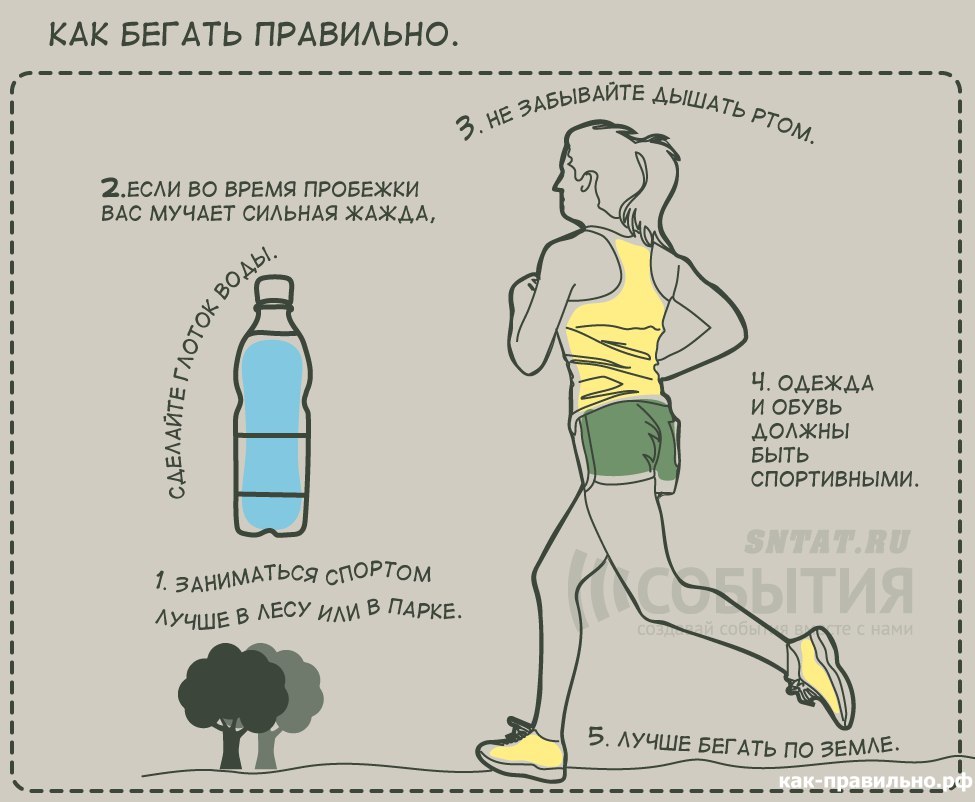
And finally, about proper breathing while running. Breathing technique is important when covering any distance. For some reason, we were all taught to breathe through our nose. But! Ask any professional runner, and he will answer that mouthing is not only possible, but necessary! That is, breathe both through your nose and mouth. The rationale for this is simple. When you load your body with cardio exercises, it needs more oxygen.Accordingly, you will inhale more at a time through your mouth than through your nose. It’s simple! At long distances (especially at the marathon), you need to breathe evenly and slowly; at short distances, you need to take in the maximum amount of air when inhaling and release it on a long exhalation. A regular run of 0.5 – 1 km will allow you to “catch” your breathing rhythm. If you do not experience shortness of breath at medium speed, then you arebreathing correctly!
Happy running!
[…] endurance increases, […]
[…] from fast walking or non-fast jogging. Technique is important! Preferably the tracks at the stadium, you can […]
[…] Personally, I run in Asics gel kayano sneakers. They are great for people with a lot of weight. And I have 100+ kg. Correct running technique is also important. […]