Tennis seems complicated: an unusual score, dozens of lines on the court, serving rules. In fact, the basic rules are logical and can be mastered in one or two evenings. This article is for those who want to figure it out from scratch: before going on the court for the first time, before enrolling a child in a section, or just to understand the broadcasts on TV.
We will not overload you with the regulations of the International Tennis Federation (ITF) and the nuances of ATP and WTA tournaments. Just what you need to play the match calmly and not feel lost.
Briefly about the essence of the game
Tennis is a game in which two players (singles) or two pairs (doubles) throw a ball over a net using rackets. The ball must hit the opponent’s side within the court markings.
The goal is simple:to hit so that the opponent cannot return the ball according to the rules – to the correct area of the court, no more than one bounce from the ground.
Each successful play earns a point. Points are added up into games (games), games – into sets, sets – into match. The first one to win the required number of sets wins.One line diagram: court → net → rally → point → game → set → match.
Court and equipment
Dimensions and layout
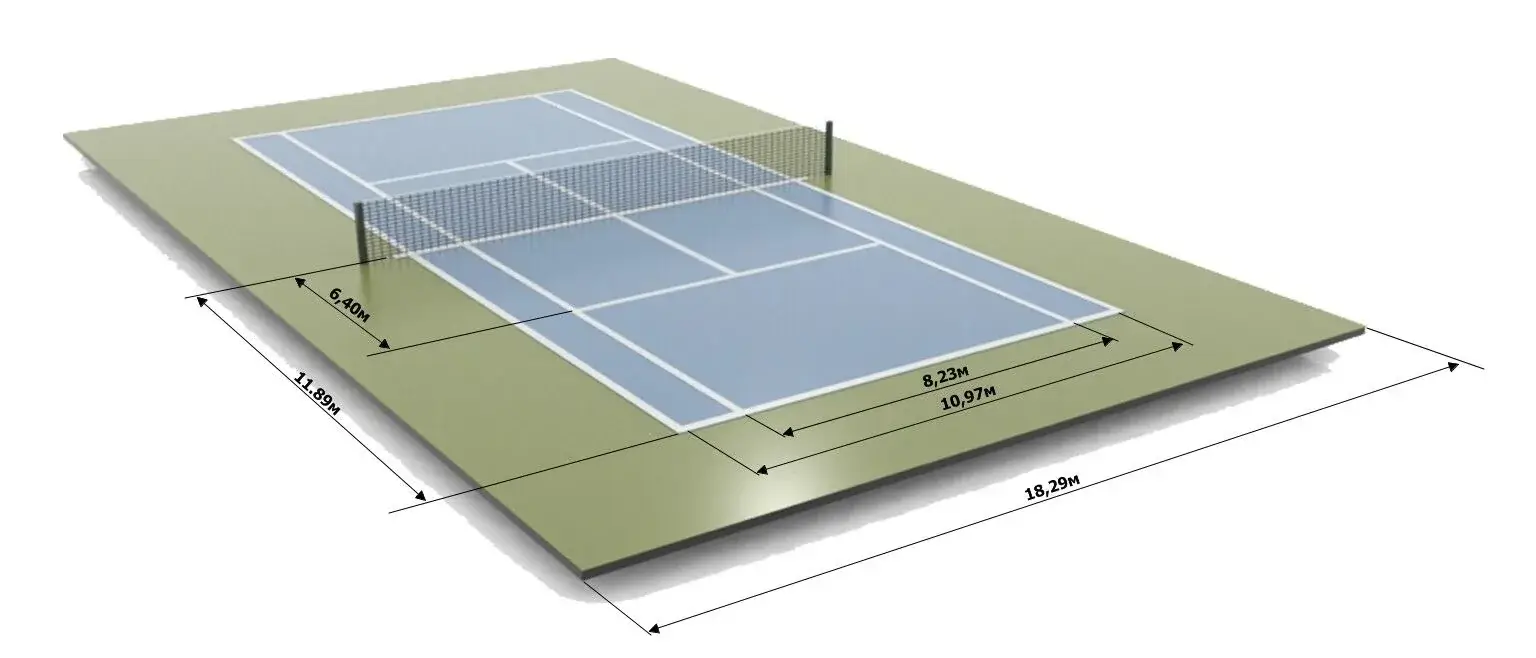
A standard tennis court is rectangular. Length – 23.77 m. The width depends on the rank:
| Discharge | Court width |
|---|---|
| Single | 8.23 m |
| Paired | 10.97 m |
In doubles play, additional side lines are used – a corridor along the edges of the court. In singles, the ball is considered “inside” if it lands between the singles sidelines (they are narrower).
Main lines:
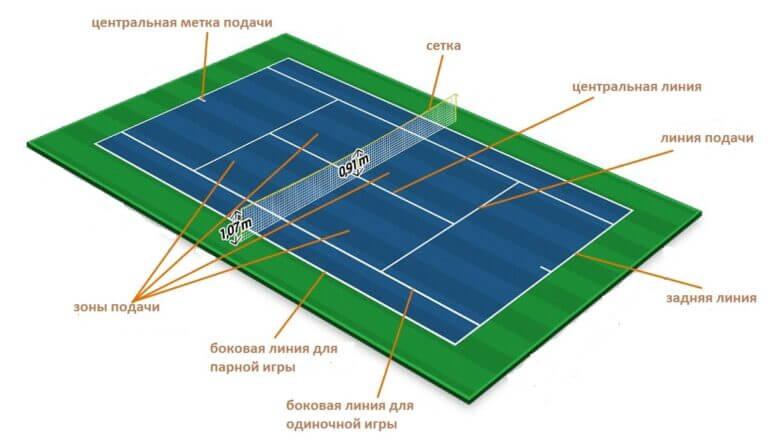
- Base lines (back) – the back border of the court.
- Side lines – left and right border.
- Service lines are parallel to the net, at a distance of 6.40 m from it. Together with the sideline and the center mark, they divide the court into fourserving squares.
- Center Mark – a short line on the baseline, extending towards the net. Divides the court in half widthwise.
Important: if the ball touches the line, it is in the court.The line enters the playing area.
Grid
The net is stretched in the middle of the court. The height of the columns is 1.07 m, in the center a little lower – 0.914 m. A ball that hits the net and does not fly over to the opponent’s side is considered a fault (except for special cases on the serve – more on that below).
Racket and ball
Racket – with a frame and strings, without strict weight restrictions for an amateur. The main thing is convenience and safety.
Ball – covered with felt, yellow (on amateur courts) or white (on traditional grass courts). For beginners, balls marked “for training” are suitable – they are softer and slower.
How points are calculated
Score in tennis is the most unusual thing for a beginner. But you can remember it in five minutes.
Points within a game
Instead of 1, 2, 3, 4, the system is used:
| Points won | Declared as |
|---|---|
| 0 | “zero” |
| 1 | “fifteen” (15) |
| 2 | “thirty” (30) |
| 3 | “forty” (40) |
| 4 | game won* |
* If the opponent has less than three points.
Example: the score30:15means that the server has two points and the receiver has one.
“Exactly” and “advantage”
If both players score three points (40:40), they announce“exactly”(deuce). To win a game, you need to beat your opponent bytwo points in a row.
- If you win a point when the score is “exact”, you get an “advantage” (advantage).
- You won one more thing – the game is yours.
- Losed with an “advantage” – the score is “even” again.
Games and sets
The game is won by the one who first scores the required number of points, taking into account the “exactly” rule.The Set is won by the player who is the first to take 6 games with a difference of at least 2 games. Possible scores: 6:4, 7:5, 8:6, etc.
If the score in the set is 6:6, a tie-break (deciding draw) is usually played.
Match
Most amateur and tournament matches are played in best of two sets (a three-set match: 2:0 or 2:1). In men’s Grand Slam matches – up to three sets (up to five sets in a match).
Tiebreaker
When the score is 6:6 in the set, instead of a regular game, a special draw is played up to 7 points (with a difference of 2). The score is kept in the usual numbers: 1, 2, 3… The serve alternates in the established order (every two points).
A won tiebreak gives the set with a score of7:6.
Feeding – where it all begins
Each rally begins with aserve. The server stands behind the baseline and hits the ball so that it goes over the net and lands in the correct square on the opponent’s side.
Where to submit
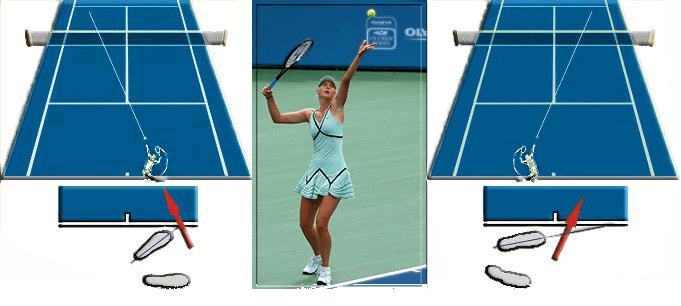
The court on the receiving side is divided into two squares:
- right square – when the server stands to the right of the center mark;
- left square – when the server is on the left.
The serverchanges sides after each pointin the game. With “exactly” (40:40), the side depends on the total number of points played in the game.
Two attempts
Each serve is given two attempts:
- First serve is usually stronger. Error – go to the second.
- Second serve is more reliable.Fault – double fault, point to opponent.
Typical serving mistakes
- the ball hit the net and did not fly over to the opponent’s side;
- the ball lands behind the line of the service square or behind the side/base line;
- the ball landed in the wrong square (for example, in the left one when the right one is needed);
- the server stepped on or behind the line before hitting (foot-foul);
- the server missed the ball or did not throw it correctly.
Who serves and how they change
At the beginning of the match, it is determined who serves first (by lot, guessing). Then the server changes after each game: he won the game on his own serve or accepted someone else’s – in the next game you (or your pair) serve.
The course of the rally: when the ball is “in play” and when it is not
After the correct submission, thedrawbegins. Players take turns hitting the ball over the net.
Main rules of the draw
- The ball can bounce off the ground only once on the receiving side. You can shoot before the rebound (go to the net), after two rebounds it’s too late.
- The ball must land within the lines (the line is considered “inside”).
- You can hit only with a racket.You cannot throw, catch or toss the ball with your hands.
- The ball can touch the net during the rally (not during the serve) and remain in play if it flies to the opponent’s side in the correct zone.
When the ball is out of play
- landed over the line (out);
- hit the net and did not fly over to the other side;
- bounced twice on one side;
- the player did hit before the ball bounced a second time;
- the player hits the net with his racket, body or clothing during a hit;
- the ball hit the player before it crossed the net to the opponent’s side.
Who wins a point in the drawing
The point is awarded to the one who was the last to play according to the rules, but the opponent made a mistake – he did not return the ball, sent it into touch, into the net, etc.
If the ball hits an opponent after flying over the net (on his side) – a point to the one who hit it.
Singles and doubles – what’s the difference
Court width
Insinglesplay is played on a narrow part of the court – between the inner side lines.
Inpaired – over the entire width, includingalleys (corridors on the sides). A ball that lands in the alley in a doubles match is in play. In singles – out.
Serve and receive in pairs
In a pair, one player serves the entire game, then in the next game, the server from the other pair serves. The partners alternateinduring the reception: one receives the serve in the right square, the other in the left (and change together with the server).
Who hits the ball
Any of the partners can hit any ball on their side. There is no “your zone is my zone” rule: the main thing is not to interfere with each other and not to touch the net.
How to win a point: cheat sheet
Short list – point is yours if your opponent:
- did not return the ball before the second bounce;
- sent the ball out (over the line);
- sent the ball to the net and it didn’t go over;
- made a double fault on serve;
- stepped on or behind the line when serving (foot-foul);
- hit the net with your body, racket or clothing;
- hit the ball twice in a row (rarely, but it happens);
- threw the racket and it hit the ball (considered a hit);
- prevented you from calmly hitting (in some situations – by decision of the judge or by agreement).
Point to opponent – if any of these situations happento you.
A few important nuances for a beginner
Switch sides
Players change sides of the court:
- after the first game;
- further – after each odd game in the set (3rd, 5th, 7th…);
- in tiebreaker – every 6 points;
- between sets – with rest.
This is for fairness: the sun, wind and conditions are the same for both.
Breaks
Between sets – up to 90 seconds (at tournaments). There is a short pause between points. On an amateur court, no one clocks the stopwatch, but it is not customary to delay the game.
What not to do
- Catch the ball with your handsbefore it goes over the line – the rally is still in progress.
- Yelling and swingingwhile an opponent is hitting is a hindrance.
- Argue “by eye”aggressively – in an amateur game they honestly re-serve or give a point to the opponent when in doubt.
Etiquette on the court
Tennis is a game with a long tradition of politeness. This is also important on the amateur court.
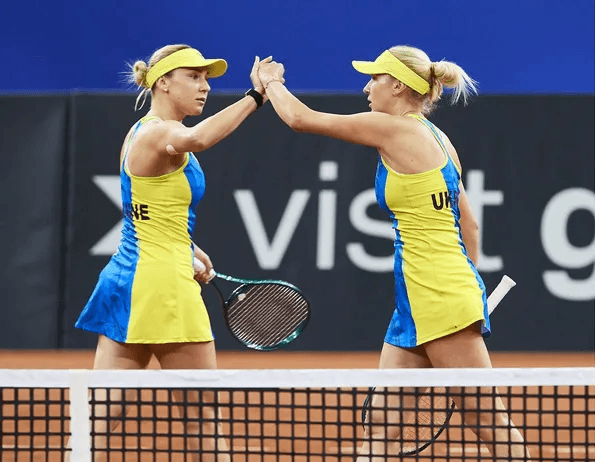
Respect for your opponent and others
- Do not shout on adjacent courts during the game.
- Do not walk behind a player who is preparing to hit.
- Return the balls to the next court if they have gone there.
- Congratulations on a good shot is normal and accepted.
Foul (ball hit player)
If you hit the ball and it flies towards the opponent at a dangerous height (especially in a pair – into the opponent’s partner), shout Foul! (or “Stop!”) – and replay the rally. Safety is more important than points.
Jump balls
The tournament is decided by a chair judge or an electronic system.
In an amateur game without a referee:
- honesty is the main arbiter;
- when in doubt, they often replay the serve or give a point to the opponent;
- jumped balls on the line are a reason to respect someone else’s opinion, and not to start an argument.
Frequently asked questions (FAQ)
Is it possible to cross the line when serving?
No. The server’s feet must not touch or be behind the line until the ball is struck. Violation – foot foul, the serve is replayed (or counted as an error).
Does a ball hit the net and fly over to the opponent’s side count?
On serve – yes, this is “serve in touch” (let): the serve is replayed, the score does not change. An unlimited number of “flights” on one serve does not happen in amateur practice, but several in a row is the norm.In play – yes, the ball is in play if it lands in the correct zone.
What is “let” on serve?
The ball hit the net on serve and landed in the correct square. The serve is not counted, is not considered an error – they play again. On sensor courts this is often accompanied by an audible signal.
How long does the average match last?
Depends on level and format:
- amateur match of three sets – 1–2 hours;
- professional – from 1.5 to 5+ hours.
For the first game, allow an hour for warm-up and an hour for the match – this is enough.
Do you need to know all the ITF rules?
For playing with friends – no. The basic rules from this article are enough. Tournament details (timeouts, medical breaks, violation code) will only be needed when participating in official competitions.
Conclusion
The rules of tennis are built logically: serve to the desired square, hit the ball until the second bounce, hit within the lines – and count the points according to the 15-30-40 system. Everything else is details that come with practice.There is no need to cram 200 pages of regulations. Read the article, go out onto the court, play a few games – and the rules will become clear by themselves. ATP and WTA tournament details are not required for the first game.
Happy playing and happy drawings!