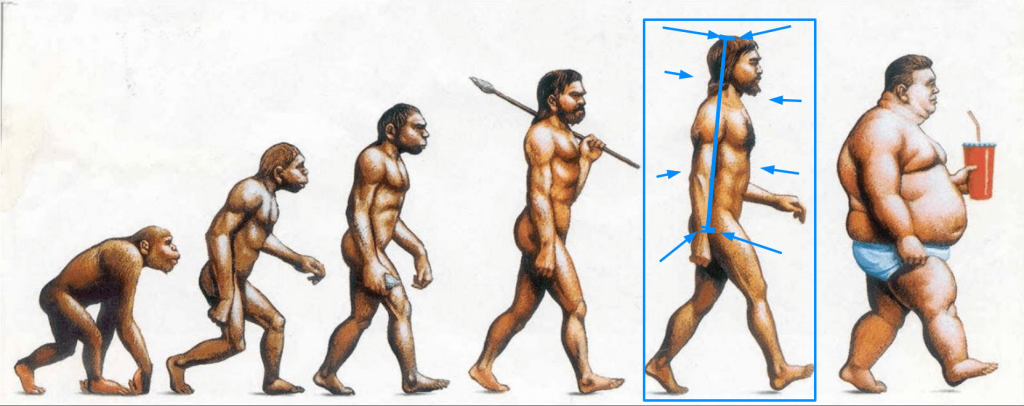
Straight posture not only gives you self-confidence, but is also the key to the proper functioning of the entire body. After all, the spinal column is the core that unites all the organs and systems of our body. But, unfortunately, we pay unforgivably little attention to the condition of this rod. But in vain! According to statistics, 85% of the world’s population have some kind of problem with the spine. Slouching, drooping and rounded shoulders, and a tilted pelvis indicate poor posture. What does this mean? Now we’ll tell you!
Consequences of spinal curvature
The most common posture disorders are:
- pain in the back and cervical region
- chronic fatigue
- pressure differences
- frequent headaches
- shortness of breath,
- irritability
- closedness.
If we stubbornly ignore problems with the spinal region, this can provoke the development of more serious pathologies. We list the main ones:
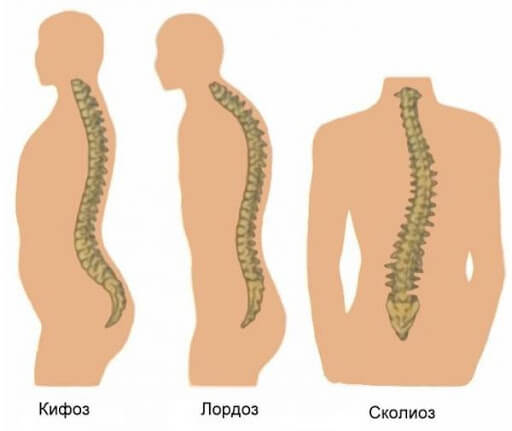
- Scoliosis is a lateral curvature of the spine (this pathology is observed in one degree or another in every third person).
- Osteochondrosis – characterized by abrasion of intervertebral discs, joints, ligaments.Untimely treatment of osteochondrosis most often becomes the cause of the development of intervertebral hernia.
- Lordosis is a curvature of the spinal column, in which it bends forward.
- Kyphosis is a pathology opposite to lordosis, which is characterized by stooping and “rounded back” syndrome.
The conclusion is obvious: in order for our body to work like a Swiss watch (or almost the same), it is extremely important to monitor your posture. At the same time, it is not enough to walk with your head held high and your back straight. It is necessary to form correct posture every day while walking, sleeping and sitting at the workplace.
Walking posture
With proper walking we:
- Straighten your back.
- We move our shoulders back without putting any effort (you shouldn’t arch your back too much, so as not to overstrain the muscle corset).
- Keep your shoulders horizontal at the same level.
- Start the step from the heel and smoothly roll onto the toe.
- Look in front of you (the chin should be in a plane parallel to the ground).
- We monitor the position of the body: the stomach is pulled in, the buttocks are tense and form one line with the spine.
Carrying heavy packages? Distribute the weight so that the load on both hands is equal. Carry a bag on one shoulder? Follow the rules below to reduce the load on your spine and prevent the development of its curvature. Better yet, reconsider this habit, otherwise you may develop scoliosis.
- Alternate your shoulders: today “walk” the bag on your right shoulder, and tomorrow on your left.
- Choose models with wide straps, thanks to which the weight is distributed more correctly and there is less pressure on the shoulder muscle.
- Make sure that the bag with all its contents weighs no more than 5 – 10% of your body weight. Doctors do not recommend carrying more than 2–3 kg of “vital” things in your bag.
- Wear shoulder bags diagonally (in other words, over your shoulder). This solution allows you to more evenly distribute the pressure between the shoulder and torso.
In general, orthopedic doctors advise giving preference to backpacks, when worn, the load on the back and spine is distributed as evenly as possible.There are several points to consider:
- you can wear a backpack either from the back or from the front, but it is better to alternate between these two options;
- backpack straps should be adjustable, wide and soft;
- it is better to choose a frame that will keep its shape;
- when worn, the backpack should fit against your back and not dangle from side to side with each step.
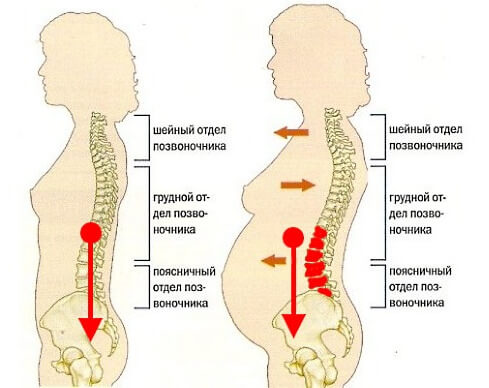
Do you carry not only backpacks and bags on your shoulders, but also children? Be prepared for the fact that sooner or later muscle overstrain of the back and prolonged stress on the intervertebral discs will lead to the development of spinal diseases. Dedicate no more than an hour a day to this favorite activity for children to avoid negative consequences for the lumbar region. Pregnant women should pay special attention to their spine. It is this part of the body that bears a huge load during this period.To maintain a regal posture and avoid back pain during pregnancy, follow our recommendations:
- Watch your weight: the larger it is, the harder it is for the spine to cope with its functions.
- Wear a special maternity bandage if necessary.
- Dedicate 15 minutes daily to morning exercises.
- Do not wear high-heeled shoes.
- Avoid standing for long periods.
- Sleep on a medium-firm mattress with a pillow between your legs. For what? You will learn about this by reading the article to the end.
These tips will help strengthen your back muscles and reduce stress on your spine.
How to sit correctly?
How much time do you spend in front of a monitor screen: 4, 8 or 12 hours? Are you sitting correctly? Hardly! Result: poor posture and problems with the spine.
How to sit at a computer desk correctly?
- Straighten your back and lean on the back of the chair (there should be no bending of the body either forward or backward).
- Lower your shoulders and move them back.
- Keep your head straight (gaze is directed in front of you).
- Bend your elbows at right angles.
- Place your hands and forearms on the same line.
- Spread your legs shoulder-width apart and bend your knees at an angle of 90°. It is important that the feet are parallel to each other and the entire surface is on the floor. If necessary, use a footrest to comply with these rules.
- Do not bend your legs under you or throw them over one another.
- Pay attention to the neck, which in the correct position should be an extension of the spine.
- Tighten your abdominal muscles a little.
If you are in the correct sitting position, your body will rest on your buttocks and heels.
Have you already straightened your back while sitting in front of the monitor screen and reading an article? Great! At first, it is unlikely that you will be able to sit straight. Tired of keeping your back straight? Walk around, warm up, stretch your arms up. This will help relieve the back muscles.
Correct sleeping position
Not only the quality of night sleep and the feeling of vigor in the morning, but also the condition of the spine depends on the position in which you sleep. At night, our body rests and recovers, and the spinal region is no exception.
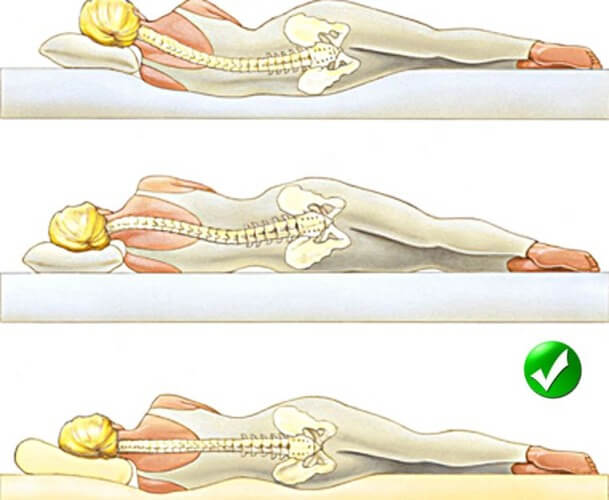
Sleep on your side to ensure maximum relaxation of your cervical and lumbar muscles. And to give the spine a natural curve, bend your legs slightly, while keeping your back straight. Better yet, place a pillow or bolster between your legs. This will reduce pressure on the spine and relieve back pain. If you like to sleep on your back, place a small pillow under your knees or lower back.But doctors do not recommend sleeping on your stomach, since in this position the neck, shoulders and pelvis take an unnatural position, which significantly increases the load on the spinal column and disrupts posture. It is important not only how we sleep, but also what we sleep on. Which mattress is better to choose – soft or hard, in order to get enough sleep and not harm the spine? First of all, the mattress should be comfortable for you. You can listen to the opinions of hundreds of specialists and doctors and buy the most expensive mattress. But if it doesn’t suit you, then in the morning you will wake up lethargic, tired and irritable. Perhaps such a mattress will be beneficial for your spine, but it’s unlikely for your psychological state! In general, doctors agree that the best option for healthy and sound sleep is a medium-hard mattress. It can “adapt” to the anatomical curves of your body, but not so much as to allow curvature of the spine during rest. A mattress that is too hard can impair blood circulation and cause back pain. If your mattress looks more like a feather bed, expect problems with your spine. Why?Shoulders and hips, sinking into the mattress, disrupt the natural curve of the spine. Now we know how to walk, sit and sleep correctly so that our posture is always smooth and beautiful. But what to do if it was not possible to avoid problems with the spine? Will massage, running, exercises on the horizontal bar help? Let’s try to objectively understand this difficult issue.
Massage for spinal curvature
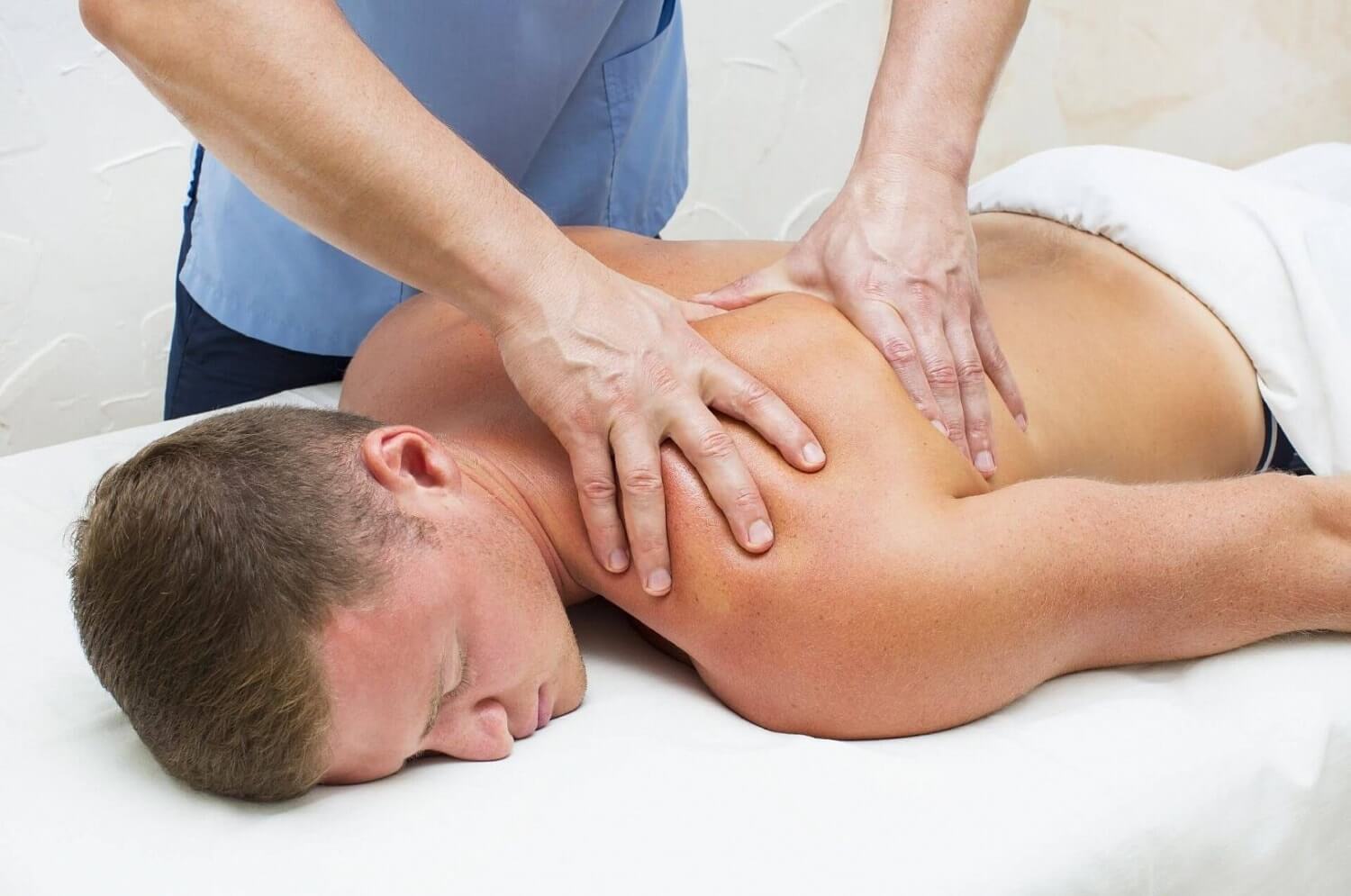
Back massage helps strengthen muscles and reduce their tension, thereby reducing pain in the lumbar region. The main thing is to visit an orthopedic doctor before a massage course, since this procedure for spinal curvature has its own characteristics.
- Massaging movements should be smooth and soft.
- There should be no intense pain during the procedure.
- After the massage, the patient should experience warmth in the areas where the muscles are affected and pleasant relaxation.
Therapeutic and preventive massage is carried out 2 – 4 times a year in courses of 8 – 12 sessions.
Running for scoliosis
For a healthy person running is an excellent prevention of the development of osteochondrosis and other pathologies of the spine. But if you have already been diagnosed with scoliosis (especially grade 3 or 4), or you constantly experience back pain, you will have to give up running. Why? Firstly, during running (or rather, in the landing phase), our weight increases 5 times, and this is too much load for a sick spine. In this regard, it is necessary to observe correct running technique. Every person needs to run correctly, even if your spine is fine. Secondly, the vibrations that occur during landing are partially damped by the intervertebral discs. With curvature of the spine, the discs not only fail to cope with this task, but are also subject to even greater pinching and abrasion.It is worth recalling the correct selection of running shoes.
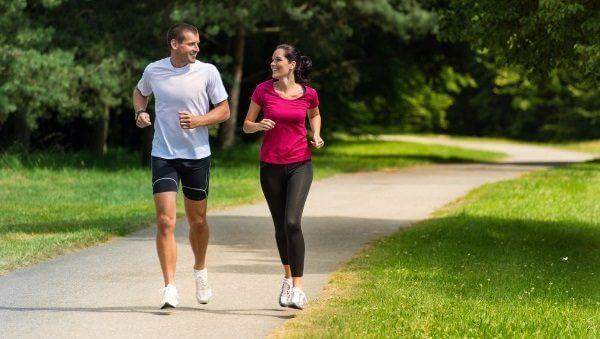
For the same reasons, when there is a pronounced violation of posture, jumping on a trampoline is contraindicated. With a mild degree of curvature of the spine, running is allowed, subject to several rules:
- Mandatory warm-up before the race.
- Short distances (up to 500 m).
- Running on soft treadmills, dirt or grass.
- Use shoes with shock-absorbing thick soles.
Doctors recommend that patients with bad backs replace running with Nordic walking, which involves the use of special poles to provide additional support. Thanks to the sticks, the load on the curved spine is reduced.
Strength exercises for scoliosis
Any orthopedic doctor and instructor in the gym will tell you that curvature of posture is a direct contraindication to performing strength exercises. Only a straight spinal column is able to withstand intense compressive pressure. It is typical in particular for squats with a barbell on the shoulders and deadlifts. By ignoring this prohibition, instead of a beautiful and fit body, you risk getting pinched nerves, constant back pain and vertebral displacement. Forget about full-range deadlifts, squats and bend-overs with heavy weights, standing presses, lunges and lying leg curls until you correct your posture.To strengthen the muscle corset, stretch the vertebrae and form the correct spinal column, it is recommended to perform the following exercises:
- Pulling up and hanging on a horizontal bar or on gymnastic rings.
- Raising legs straight or bent at the knees while hanging.
- Plank exercise (the side plank is especially useful, helping to get rid of protruding shoulder blades, stoop, kyphosis).
- The “boat” exercise, familiar from childhood.
- Push-ups or on parallel bars.
- Pancake or dumbbell rows in an incline position.
- Hyperextension is an exercise aimed at developing and strengthening the back muscles.
Useful exercises for the back:
Important! If during the exercise you experience pain or discomfort in the back area, exclude it from the training process.Believe me, training through pain will not be beneficial at best, and at worst it will harm your health. Have fun and take care of your spine from a young age if you want to live a long and active life filled with bright colors!
Your blog is a breath of fresh air in the often stagnant world of online content. Your thoughtful analysis and insightful commentary never fail to leave a lasting impression. Thank you for sharing your wisdom with us.
Thanks a lot